BurpeeTalk Original
Aline Wirz and the long road back
When Aline Wirz weighed just 32 kilos at her lowest point, a future as an elite athlete seemed unthinkable. Her days revolved around counting calories, avoiding meals and exercising control over a body that was steadily deteriorating. Years later, that same woman stood at the start of the CrossFit Games, the highest stage in her sport.
That contrast is what makes her story so remarkable. Not because it is a classic success story, but because it shows how the same traits that can nearly break a person can ultimately also serve as the foundation for recovery.
A battle that started early
Wirz grew up in a small Swiss village of about two thousand residents. Sport played an important role in her youth. She ran, cycled, climbed and even tried triathlons. Competition attracted her, but not out of a need to win. It came more from a desire to challenge herself.
Around the age of fourteen, something changed.
What began as greater attention to food and body weight slowly grew into an obsession. Not because she felt overweight, she emphasizes. Looking back, she sees it primarily as a search for control. Every calorie was calculated, every meal carefully analyzed. The scale became the measure of success.
"It was no longer about looking good," she said. "It was about control."
That control became addictive.
The downward spiral
In the years that followed, Wirz drifted further and further away. Her weight eventually dropped to around 32 kilos. Family and friends watched her body change, but the struggle took place largely in her head.
It was not only the physical consequences that weighed heavily. Socially, her world began to shrink as well. Going out to eat with friends became complicated. Moments of togetherness suddenly revolved around dodging, hiding and explaining.
Yet something crucial happened.
Her parents chose not to focus solely on pressure or prohibition. They kept believing in her. Her mother made appointments, sought dialogue and encouraged openness. Eventually, Wirz shared her story with family, friends and those around her.
That proved to be a turning point.
Once the secrecy disappeared, the eating disorder slowly lost part of its grip.
The long road to recovery
Recovery did not come in a single moment.
There was no morning on which Wirz woke up and decided it was all over. Quite the opposite. The process took years. First her weight returned to a healthier level. Then came a far more difficult challenge: building a normal relationship with food.
She describes that phase as perhaps the hardest of all.
She could eat, but the guilt remained. Every meal brought thoughts about calories and consequences. Only years later could she, by her own account, truly eat without a mental struggle.
That experience changed her view of health for good.
For many people, recovery simply means gaining weight again. For Wirz, it meant learning to trust her body.
The sport that changed everything
In 2019, Wirz encountered CrossFit for the first time.
When a friend asked her to lift a fifteen-kilo barbell, she thought it was impossible. She came from the endurance world of marathons and running and had barely any muscle mass in her upper body.
Yet something happened that she had not experienced in years.
For the first time, she saw her body change in a way that made her proud.
Where she had once tried to become as small as possible, she now began to value strength. Muscles were no longer an enemy, but proof of what her body could do.
CrossFit gave back something she had lost for years: confidence.
Not only in her performance, but in her own reflection as well.
The same engine, a different direction
What makes her story special is that Wirz does not try to deny the personality that once steered her toward an eating disorder.
She acknowledges that this trait is still present.
She describes herself as someone who can be extremely driven. Someone who becomes completely absorbed in a goal once that goal takes on meaning. In the past, that meant controlling her weight. Today, the same focus translates into training, coaching and competition.
The difference, in her view, lies not in the intensity but in the direction.
"I know I can go very far," she says. "That is why I have to consciously choose where I direct that energy."
That insight sounds simple, but it may be the very core of her transformation.
From surviving to competing
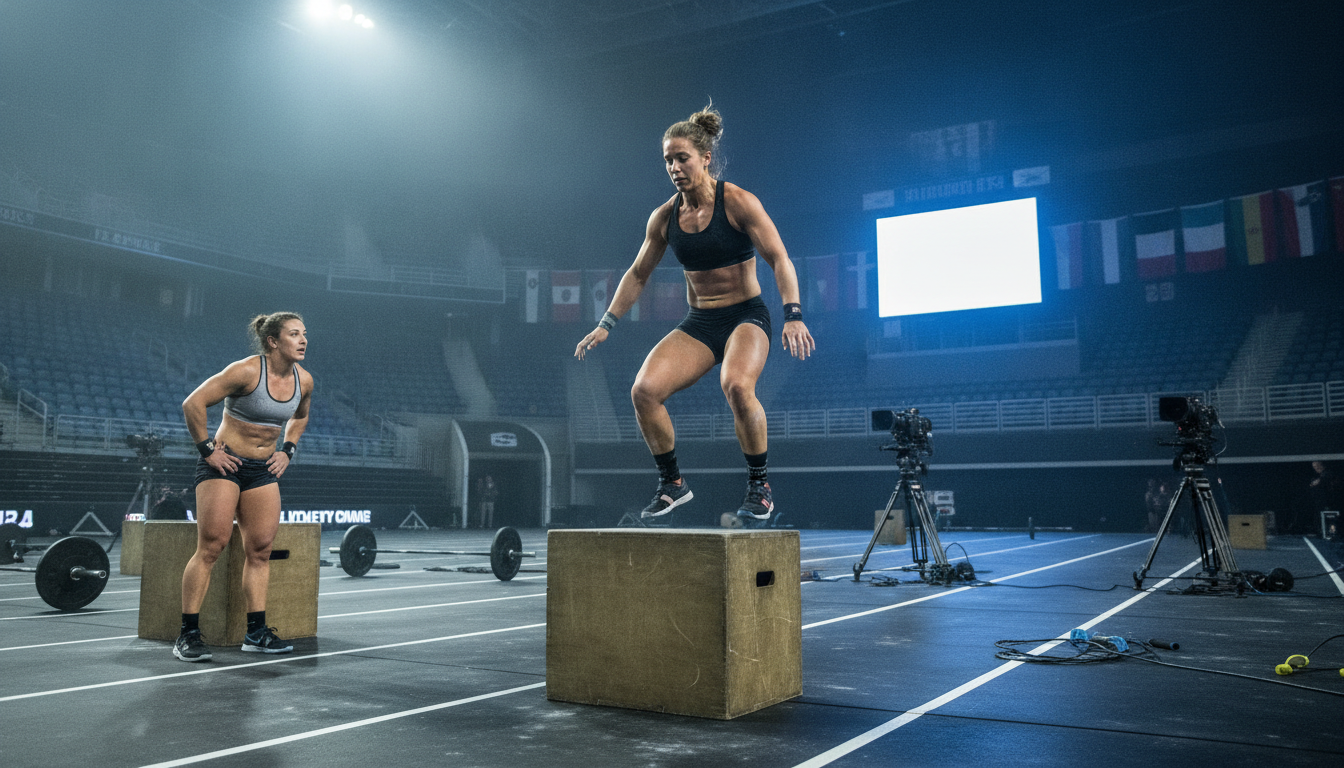
Seven years after first picking up a barbell, Wirz reached the CrossFit Games. Not in a straight line, but along a route full of setbacks.
She missed qualification by a single spot. She battled a serious neck injury. She received an invitation just twelve days before the Games after another athlete withdrew.
Yet she was there.
As an athlete.
As an affiliate owner.
And as someone who once was not sure she would win her own fight.
Perhaps that is ultimately the most impressive thing about the story of Aline Wirz. Not that she made it to the CrossFit Games, but that along the way she learned that real strength is not about how much weight you can lift.
Sometimes it is simply about the courage to rebuild yourself.