BurpeeTalk Original
O'Hara's Doping Case Ignites TRT Debate
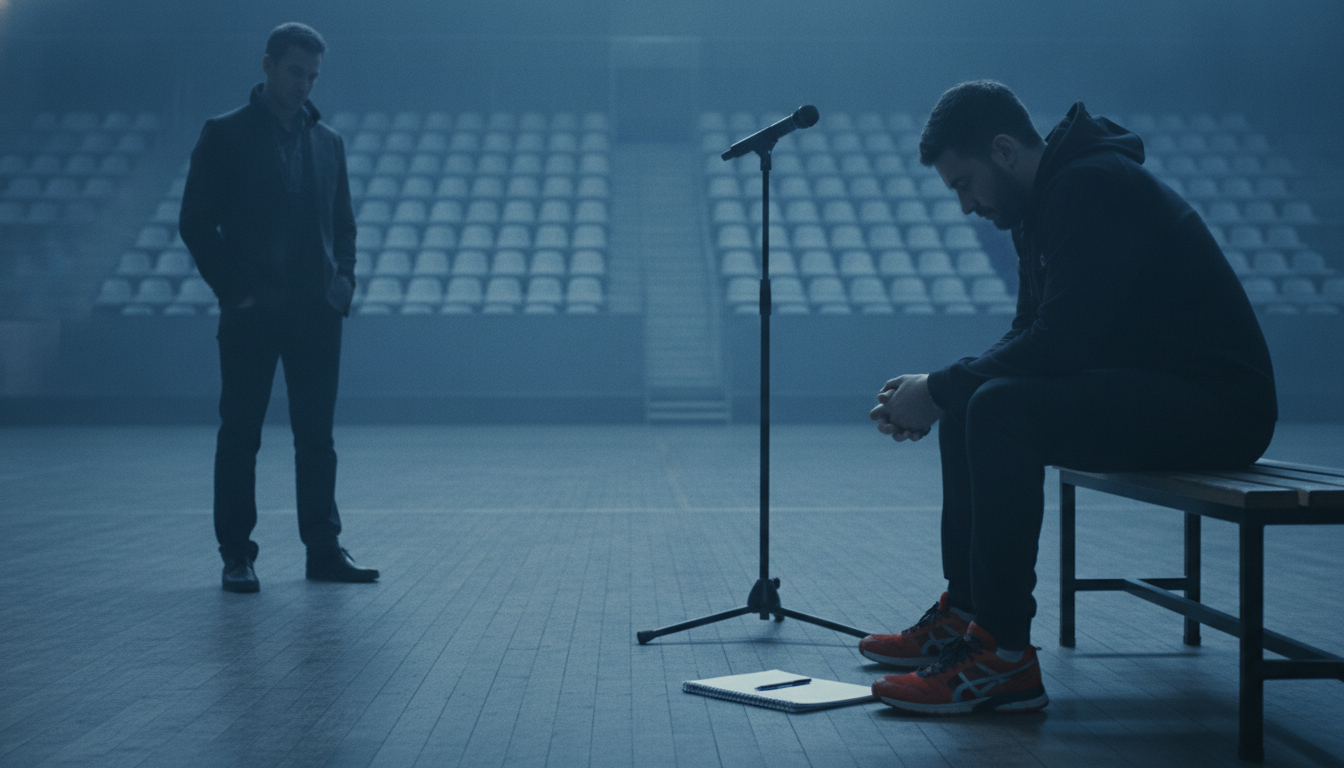
The positive doping test of Wayne O'Hara continues to stir controversy within the CrossFit world. The American, who finished second in the 65-69 age category at the CrossFit Games, lost his podium place after a test revealed the presence of exogenous testosterone. O'Hara acknowledged that he was using testosterone through a medically supervised programme, but claims he was unaware that this was prohibited under CrossFit rules.
His case exposes a growing debate: where is the line between medical treatment and performance enhancement?
What exactly is TRT?
TRT stands for Testosterone Replacement Therapy. The treatment is used in men with demonstrably low testosterone levels, often as a result of age, illness or a hormonal disorder.
Testosterone is the primary male sex hormone and plays an essential role in muscle mass, bone density, recovery capacity, libido and energy levels. As men age, natural production gradually declines. Some men experience fatigue, reduced muscle strength and a lower training capacity as a result.
Under medical supervision, TRT can raise those levels again. In theory, this is done to a "normal" level, but in practice that boundary is less clear than is often suggested. Different laboratories and clinics use varying reference values, which fuels disagreement about what normal actually means.
Why is testosterone considered doping?
In virtually every professional sport, testosterone appears on the list of prohibited performance-enhancing substances.
The reason is straightforward: testosterone has demonstrable effects on performance. It promotes muscle growth, speeds up recovery between training sessions, increases training capacity and helps athletes handle more intensive training blocks.
For an older athlete, that advantage can be even greater. While peers contend with natural hormonal decline, an athlete on TRT can compensate for a significant portion of that deterioration.
Critics of O'Hara point to his striking progression. After previously finishing outside the top ten, he suddenly stood on the podium this year. That does not automatically mean TRT is the only explanation, but it does make his doping case particularly sensitive.
O'Hara's explanation
According to O'Hara, he visited a wellness clinic in late 2025 after a blood test indicated low testosterone levels. He was diagnosed with hypogonadism, a condition in which the body produces insufficient testosterone.
He then began a prescribed TRT programme. In his own account, he emphasises that this took place under medical supervision and that his blood values remained within the limits set by the clinic.
The most controversial part of his story is his claim that he did not know testosterone was prohibited in CrossFit competition.
O'Hara accepted responsibility for the violation and described it in hindsight as a major mistake. Nevertheless, many athletes have responded with scepticism. He has been doing CrossFit for sixteen years, has competed in qualifiers multiple times and reached the highest Masters level. For that reason, critics find it hard to believe that an experienced competitive athlete would have been unaware of the doping rules.
Therapeutic Use Exemptions
An important element of the debate is the Therapeutic Use Exemption (TUE).
A TUE is a medical exemption that allows an athlete to use a prohibited substance under specific conditions. Such exemptions are sometimes granted when an athlete would face serious health consequences without treatment.
For testosterone, however, the requirements are particularly strict. Age-related decline in testosterone levels is generally not sufficient grounds for an exemption. Organisations want to prevent normal ageing from being compensated with substances that can simultaneously enhance performance.
According to O'Hara, both his appeal against the sanction and his TUE application were rejected.
A growing problem in Masters sport
The case touches on a broader development within the fitness world. TRT is becoming increasingly popular among middle-aged and older men. Particularly in fitness, strength and CrossFit circles, the number of athletes who view hormonal optimisation as part of a healthy lifestyle is growing.
Proponents see TRT as a way to improve quality of life. Opponents argue that competition cannot remain fair when part of the field uses additional testosterone and another part does not.
That dilemma is not unique to CrossFit. The same debate has been raging for years in bodybuilding, powerlifting and various Masters sports.
Conclusion
The case of Wayne O'Hara ultimately involves more than a single positive test. It exposes how difficult it is becoming to combine sporting fairness with modern hormone therapy. TRT may be a legitimate medical treatment for many older men, but the moment performance and competition enter the picture, sports governing bodies view that same treatment as doping. That is precisely why the debate O'Hara has ignited will likely continue long after his suspension ends.